RDA: the dripper defined, and how it works
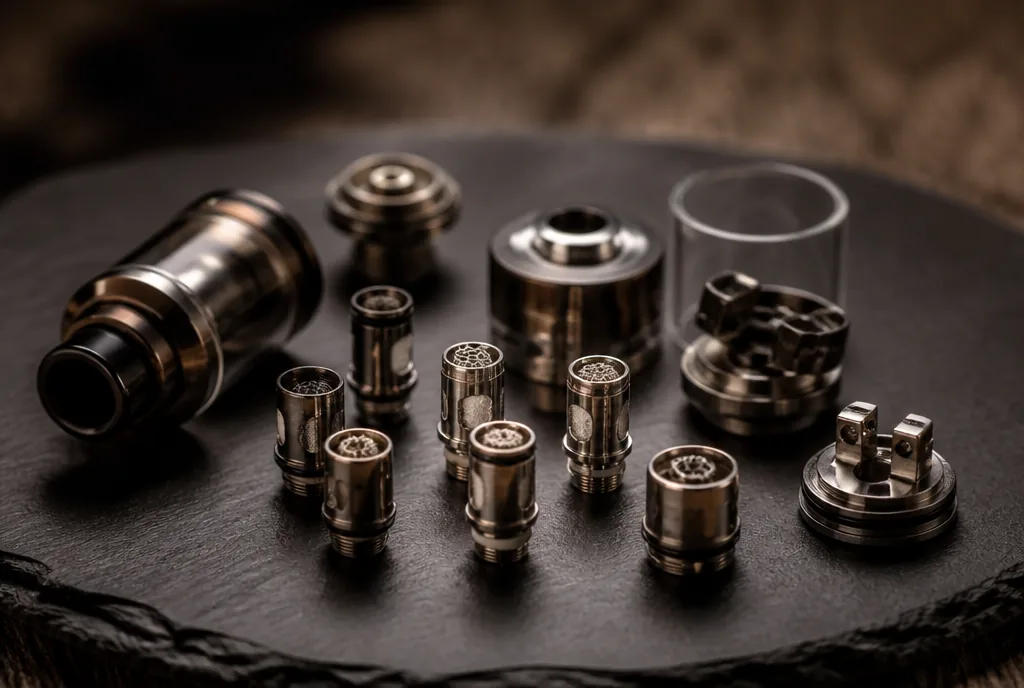
The three letters turn up in every conversation between experienced vapers, usually surrounded by deck vocabulary and two or three neighbouring acronyms. To anyone new to vaping the object looks like a clearomiser with its tank cut off, which does nothing to explain the appeal. An RDA is a precise piece of hardware with a usage logic of its own, and British listings rarely separate it clearly from the variants sitting next to it on the shelf.
What an RDA is
An RDA, short for rebuildable dripping atomiser, is an atomiser with no tank, onto which the vaper drips e-liquid directly on the wick sitting in the coil. The everyday British name for the same object is a dripper, and the two words are used interchangeably in UK shops.
The absence of a reservoir is the criterion that defines the category. Everything else, materials, coil count, airflow arrangement, varies from one model to the next without changing what the object is.
How dripping actually works
The principle comes down to three parts and one gesture. Following the sequence explains why this format imposes a rhythm of use that has nothing in common with a pod or a stock coil tank.
The deck is the base onto which the coil or coils are fixed. Drilled and screwed posts hold the legs of the resistance wire and establish the electrical contact with the battery underneath. The vaper builds the coil, then threads a wick of cotton through the wraps, and it is that manual build step that places an RDA in the rebuildable family.
Below the deck, a hollowed recess catches the surplus liquid. It is called the juice well, and its depth decides how many puffs are available between top-ups. Recent models cut more generous wells than the first generation did, without turning the device into a tank: the capacity stays in the region of a few drops.
Once the cotton is saturated, a dripper delivers a handful of puffs before asking for more. The gesture is to lift the cap, drip two or three drops onto the wick and close it again. Users of this format accept that constraint as the price of permanently fresh cotton and a flavour profile that does not degrade across a tankful.
RDA, RDTA and RTA: three acronyms, three architectures
The terms circulate as if they were synonyms, which they are not. Each describes a different architecture, and the confusion regularly produces a badly targeted order. British retailers list all three side by side in the same section, so the reading grid matters.
RDA is rebuildable dripping atomiser: no reservoir, manual feeding drop by drop. RDTA is rebuildable dripping tank atomiser, where the deck stays accessible as on a dripper but a reservoir sitting underneath feeds the wicks continuously. That reservoir means it is no longer a dripper in the strict sense.
RTA is rebuildable tank atomiser. The build sits inside a closed chamber surrounded by the reservoir, and the architecture moves a long way from dripping. RBA is the umbrella term covering all of them, and it is the word to search when you want the whole family rather than one branch.
The BF or bottom feeder variant
One variant earns its own entry. A BF RDA has a hollow positive post, drilled right through, which lets e-liquid come up from below the deck rather than being poured on from above.
That post screws onto what British shops call a squonk mod, fitted with a soft bottle housed in the grip. Squeezing the bottle pushes liquid up to the cotton, which removes the cap lifting gesture entirely.
The result keeps the logic of the format, fresh cotton and a small vaporisation chamber, while offering tens of puffs of runtime. Most drippers sold today ship with an interchangeable BF post in the box, so the conversion costs nothing extra.
Why this format sits outside the 2 ml cap
Here is the regulatory nuance product listings pass over in silence. UK rules cap refillable tanks and pods at 2 ml of capacity, which is why every British tank on the shelf is a small one, and why nicotine containing e-liquid comes in 10 ml bottles at up to 20 mg/ml.
A dripper has no tank. It therefore falls outside that capacity cap, unlike a clearomiser, whose British version is systematically limited to the same 2 ml. The squonk bottle plays on similar ground, since it is a feeding bottle rather than a reservoir integral to the atomiser.
That particularity partly explains the commercial longevity of the format in Britain, at a time when other atomisers saw their stated capacity cut by more than half. It also explains why shortfill bottles and separate nic shots became the standard way of feeding a high output setup here.
Who the format is for
Building by hand assumes you can read a resistance value in ohms and check it against the battery in use. The liquids paired with this format are usually thick and heavily glycerine based, which points straight to the PG VG ratio printed on the bottle.
The format suits vapers who inhale direct to lung and want a precise flavour rendering, even at the cost of frequent refeeding. It also assumes a mod running removable cells, and therefore constant attention to the condition of a 21700 battery or whatever cell sits underneath.
The deck vocabulary worth knowing
The language of building forms a self-contained subset, and it turns up in every model description and every build tutorial published in Britain.
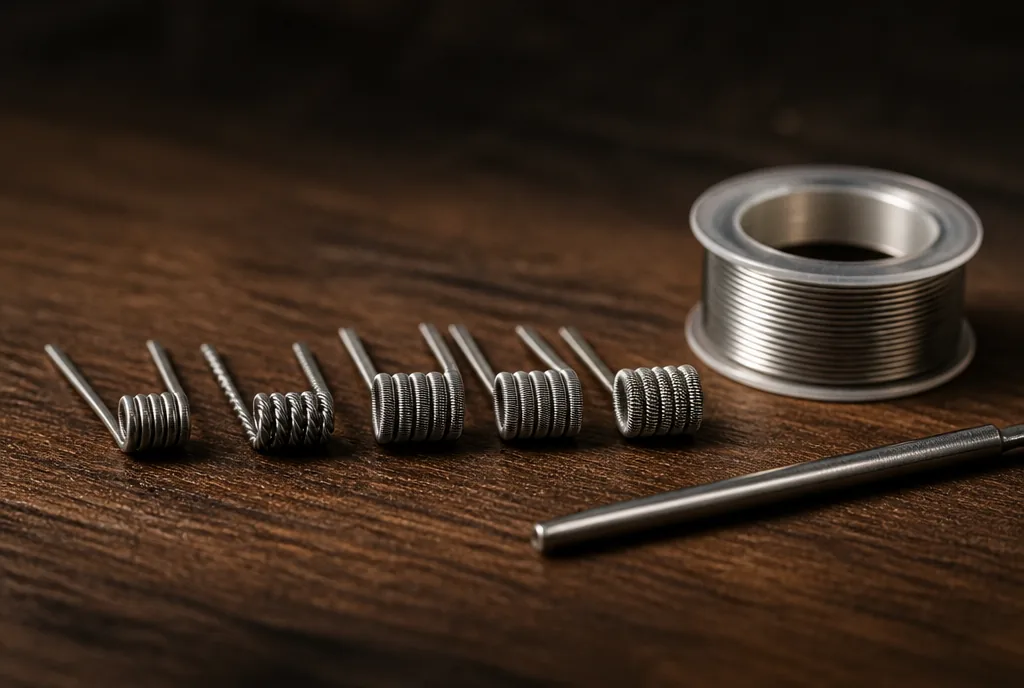
Coil is the resistance itself, wound in wraps around a former. The number of wraps, for a given wire and diameter, sets its value in ohms. Wick is the cotton threaded through those wraps, and dry hit is what you get when the wick has not reabsorbed enough liquid between puffs.
Mesh replaces the wound wire with a strip of metal gauze. It heats over a wider surface, which noticeably changes the rendering on an RDA compared with a traditional coil, and it has become the default on most British listings.
Airflow names the air intake, and its position relative to the coil changes everything. Side airflow, bottom airflow and top down airflow give three distinct behaviours on the very same build.
The cap, finally, is the cover that closes over the deck. Its internal volume defines the vaporisation chamber: the smaller it is, the shorter the path between the coil and the drip tip.
Frequently asked questions
Can a dripper be used on a pod with a built-in battery?
Rarely. Those devices take proprietary cartridges and do not always carry the 510 thread required. A mod running removable cells remains the logical host.
How many drops should go on at a time?
Two to four drops cover most cases. Excess ends up in the well, then works its way back up the air intakes and floods into the mouthpiece.
What do single coil and dual coil mean?
Single coil means one resistance on the deck, dual coil means two. The second draws considerably more current and demands a cell able to supply it.
Does the cotton need changing at every refill?
No. It is replaced when the flavour turns dry or muted, typically after several days of use, or when switching to a markedly different flavour.
What is the difference between a dripper and an atomiser?
Atomiser is the generic word for any part that turns liquid into vapour. A dripper is one subcategory of it, defined by the absence of a tank.
Placing the RDA in the wider vocabulary
One sentence covers it: an RDA is a rebuildable atomiser with no tank, fed drop by drop, whose BF version adds bottom feeding from a squonk bottle. Materials, diameter and post count are model choices rather than parts of the definition.
The word belongs to a family of terms that only make sense against one another, and the neighbouring entries in the definitions section light up the same corner of the vocabulary, the one covering hardware and the way it is powered.
Editorial content for adult readers only. Vaping products usually contain nicotine, a substance that causes addiction. Not for sale to under-18s in the United Kingdom. This article is not a buying recommendation.
 01
01 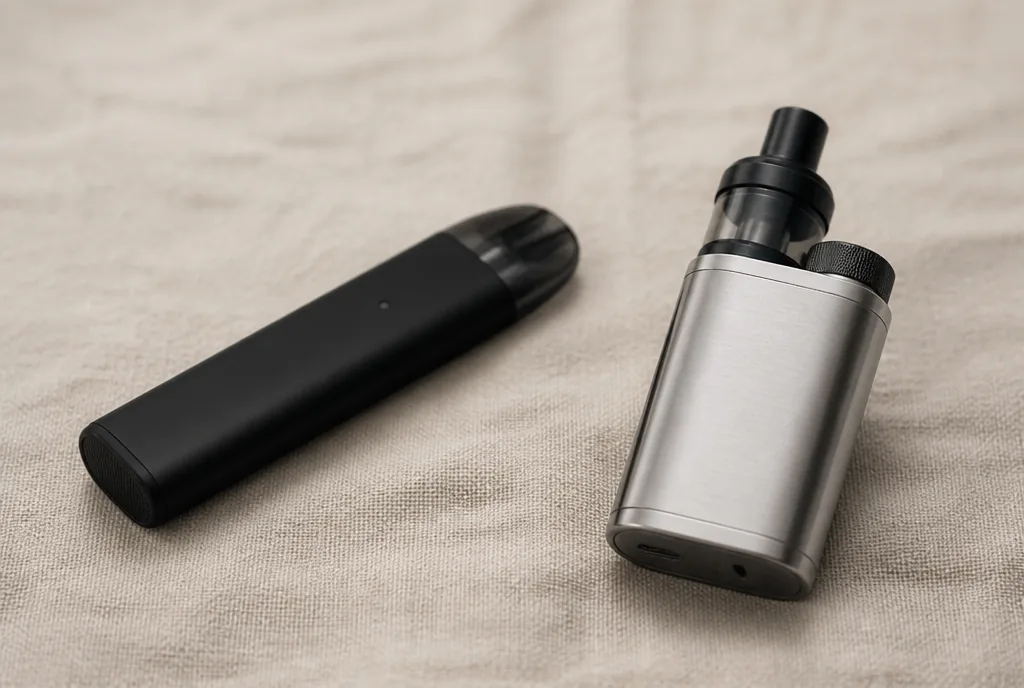 03
03